DARLEVANT Journal
The Essential Flavors of the Levant: Herbs and Spices That Define a Cuisine
Levant Spices Guide: Herbs and Flavors That Define a Cuisine
Levant spices play a central role in the culinary identity of the Eastern Mediterranean. Across the Levant, cooking traditions rely on balance and clarity of flavor rather than heavy seasoning. A few carefully chosen herbs and spices can transform simple ingredients into dishes that feel aromatic, warm, and deeply characteristic of the region.
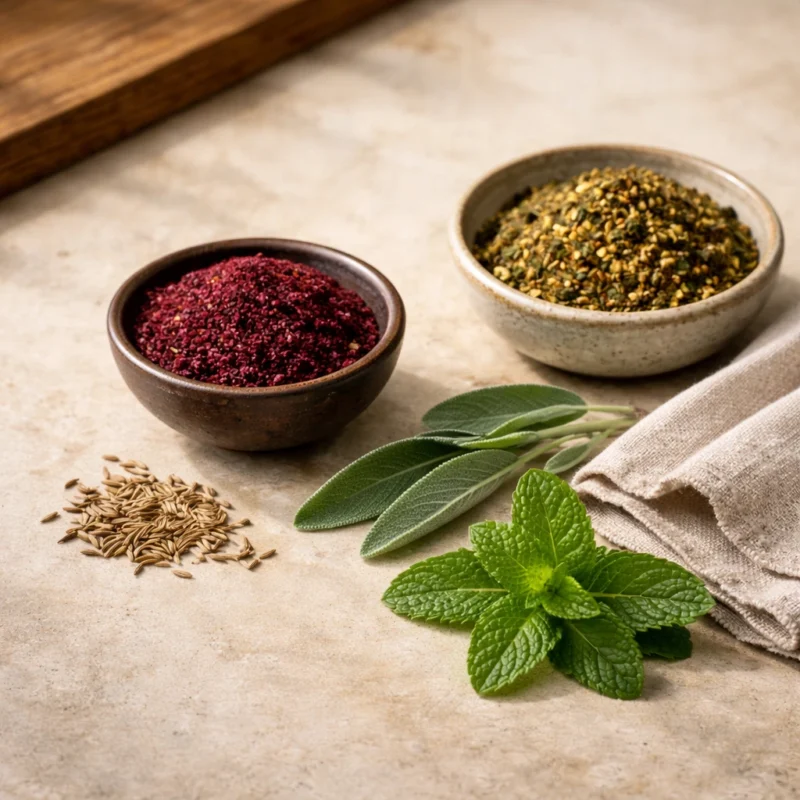
Among the most recognizable Levant spices are za’atar, sumac, cumin, mint, and sage. Each ingredient contributes a different dimension of flavor, yet together they create the distinctive profile associated with Levantine cuisine.
Levant spices and regional food traditions
Levantine cooking often emphasizes freshness and natural aroma. Herbs are used generously, olive oil provides richness, and spices are applied in measured amounts that support the dish rather than dominate it. This approach produces food that feels balanced and expressive without becoming heavy.
Many traditional dishes rely on a combination of herbs and grains with simple seasoning. Salads, flatbreads, roasted vegetables, and grilled meats all benefit from the aromatic character of Levant spices.
Za’atar as a defining Levant spice
Za’atar is one of the most recognizable Levant spices. The name can refer both to an herb related to thyme and to a traditional spice mixture used across the region. In everyday cooking, za’atar is commonly combined with sesame seeds and sumac to produce a blend with herbal depth, nutty warmth, and a subtle tangy finish.
The flavor works especially well with olive oil, flatbread, yogurt-based dishes, and roasted vegetables. Its balanced character is one reason it has become closely associated with Levantine food culture.
Sumac and the brightness it brings
Sumac is another essential Levant spice known for its vibrant red color and naturally tart flavor. Made from dried and ground berries, sumac introduces a gentle acidity that can brighten salads, grilled meats, and vegetable dishes.
Unlike citrus juice, sumac adds both flavor and color while remaining subtle enough to complement other ingredients. In Levant kitchens it is frequently used to finish dishes where a fresh acidic note is needed.
Cumin as a warm aromatic base
Cumin contributes warmth and depth to many dishes across the Levant. Its earthy aroma pairs naturally with legumes, grains, and slow-cooked preparations. Even a small amount of cumin can give a dish structure and aromatic foundation.
Because its flavor is strong, cumin is often used carefully so it supports the dish without overpowering the brighter herbal elements.
Mint and sage in everyday cooking
Fresh herbs remain a defining feature of Levantine cuisine. Mint appears in salads, yogurt dishes, and herbal infusions where it adds freshness and contrast. Its bright aroma helps balance heavier flavors in savory dishes.
Sage is also widely used, particularly as a warm herbal infusion enjoyed throughout the region. Its comforting fragrance and slightly earthy flavor make it a familiar ingredient in many Levantine households.
The balance behind Levant spices
What ultimately defines Levant spices is the harmony between them. Za’atar provides herbal depth, sumac adds brightness, cumin contributes warmth, and herbs like mint and sage maintain freshness. Together they create the layered but balanced flavor profile that characterizes Levantine cuisine.
Through this combination of herbs, spices, and simple ingredients, Levantine cooking continues to express a long tradition of food shaped by landscape, climate, and everyday life.