DARLEVANT Journal
Building a Traditional Levantine Pantry: Essential Herbs, Spices, and Grains
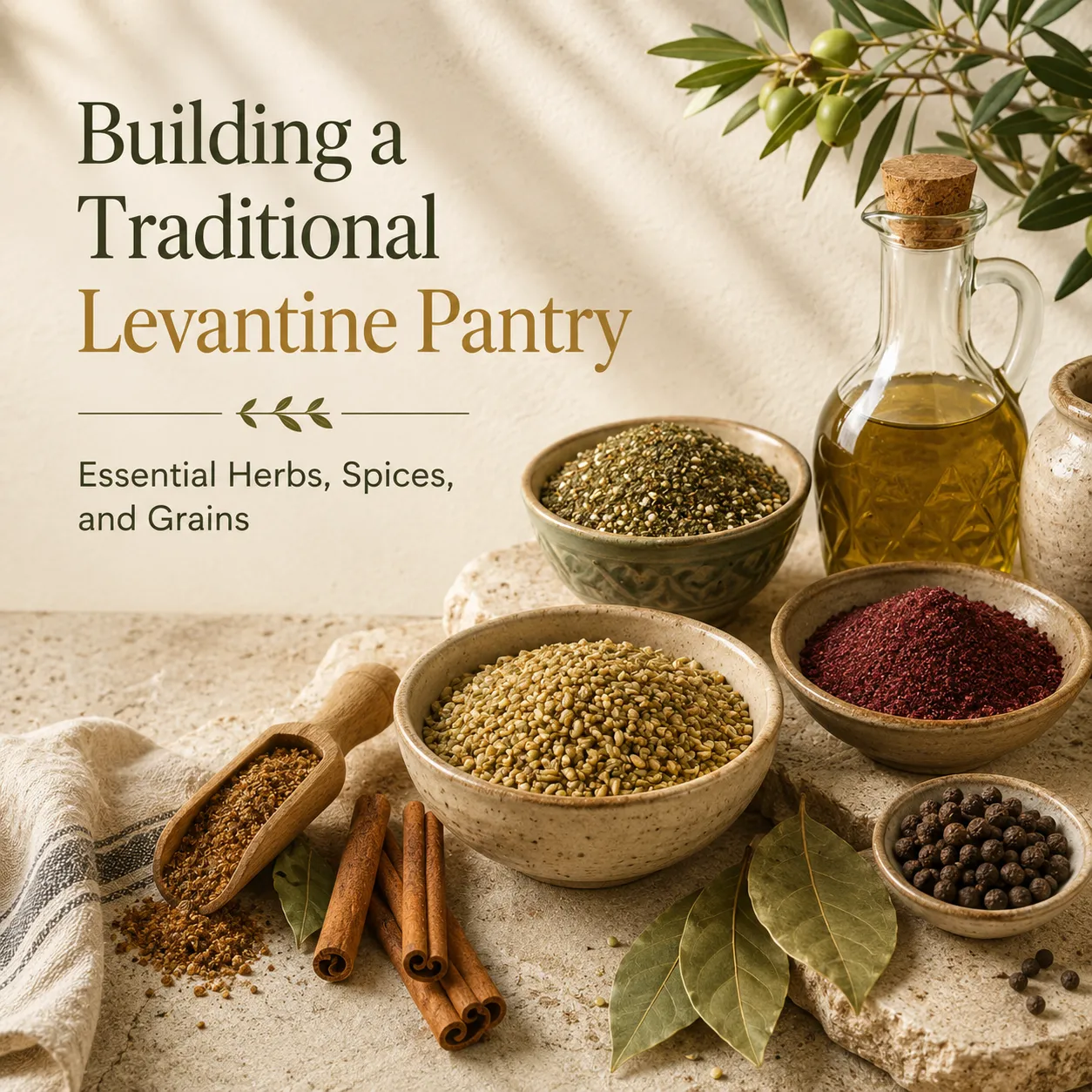
Building a Traditional Levantine Pantry: Essential Herbs, Spices, and Grains
Every cuisine is shaped by a collection of ingredients that appear again and again in everyday cooking. In the Levant, these ingredients form the foundation of a culinary tradition built on balance, simplicity, hospitality, and seasonality.
From fragrant spice blends and ancient grains to aromatic herbs and pantry staples, a traditional Levantine pantry makes it possible to create deeply satisfying meals using ingredients that have been valued for generations.
Whether you are discovering Levantine cuisine for the first time or reconnecting with familiar flavors, building a thoughtfully stocked pantry is one of the best ways to bring authentic regional character into your kitchen.
What Defines a Levantine Pantry?
Levantine cuisine reflects the culinary traditions of Jordan, Palestine, Syria, and Lebanon. While each region has its own specialties, many households rely on the same core ingredients.
These pantry staples are versatile, practical, and deeply rooted in everyday life. Rather than relying on a single dominant flavor, Levantine cooking creates depth through carefully balanced combinations of herbs, spices, grains, and olive oil.
Many dishes begin with only a few simple ingredients, yet the results are layered, comforting, and memorable.
Essential Herbs and Spice Blends
Zaatar
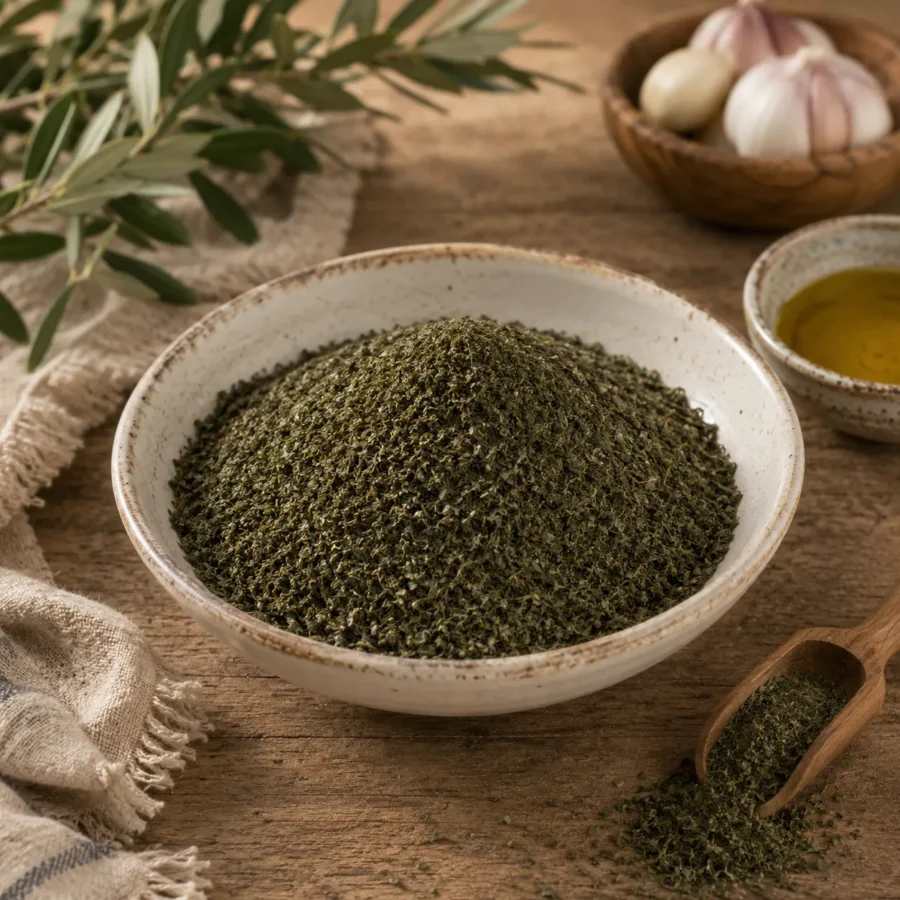
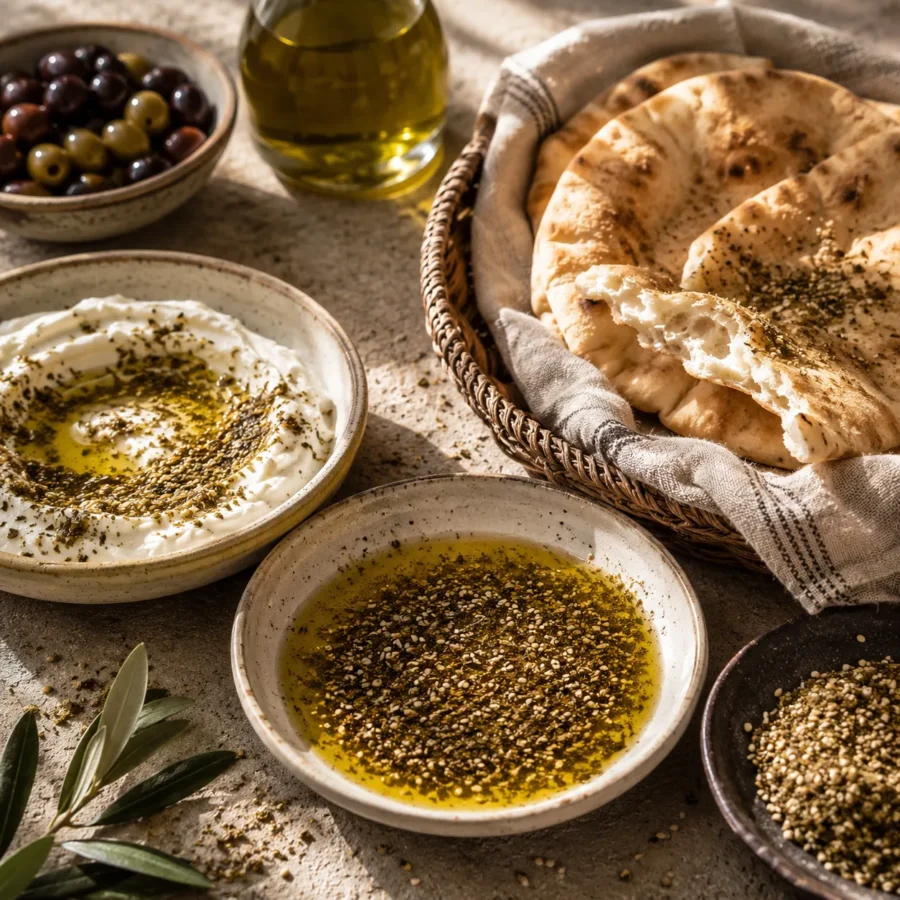
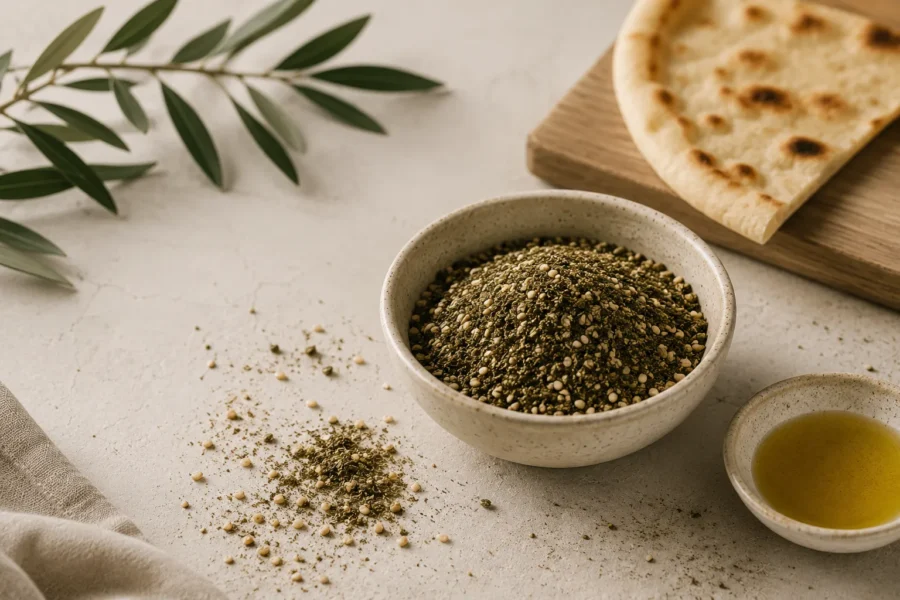
Few ingredients are as closely associated with Levantine cuisine as zaatar. This traditional blend combines herbs, sesame seeds, and sumac to create a savory, nutty, and lightly tangy flavor.
Zaatar is commonly enjoyed with olive oil and flatbread, sprinkled over labneh, or used in baked dishes.
Learn more in our guide to enjoying zaatar the traditional way.
Sumac
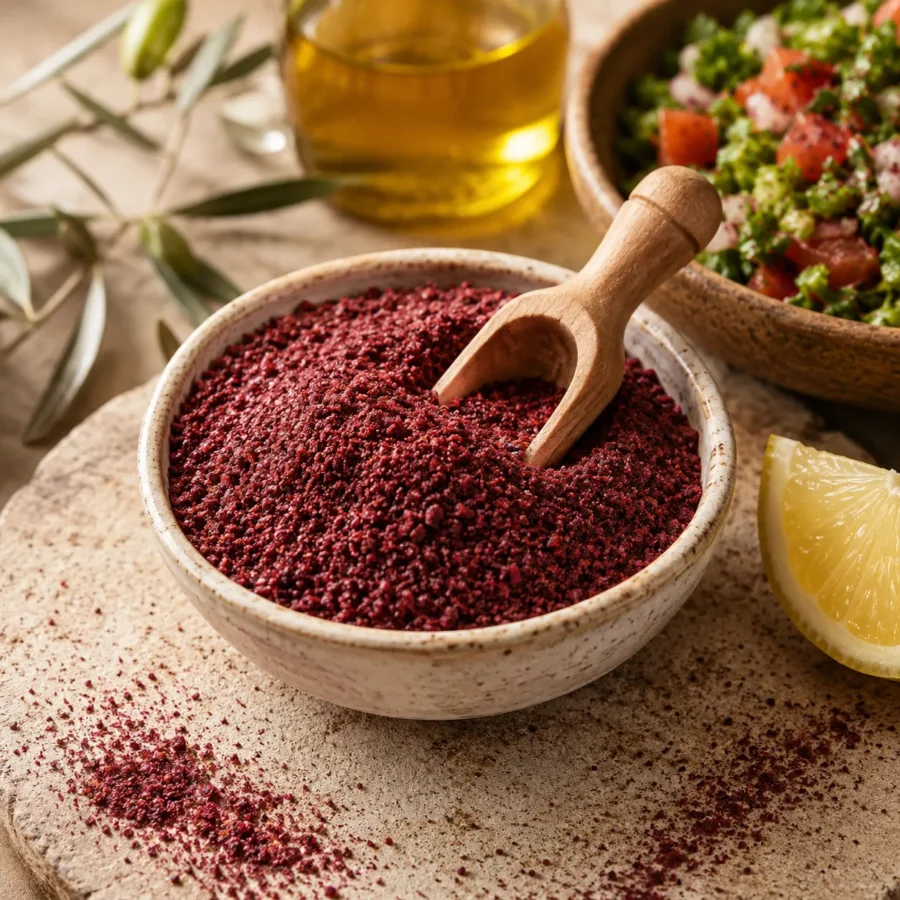
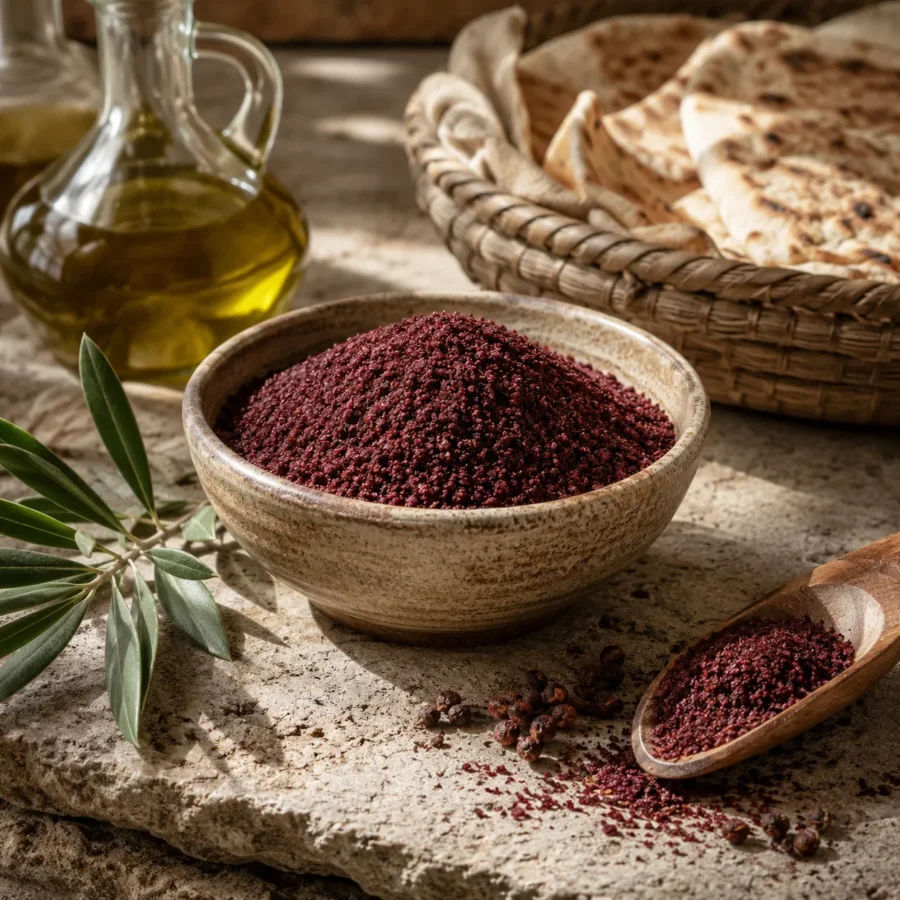
Known for its deep burgundy color and bright tangy flavor, sumac adds balance and freshness to many Levantine recipes.
It is frequently used in salads, onion mixtures, marinades, and traditional dishes such as musakhan.
Explore our complete sumac spice guide.
Seven Spice Blend
Often called baharat, seven spice blend brings warmth and depth to rice dishes, meats, soups, and stews.
While recipes vary, many blends include black pepper, cinnamon, allspice, cumin, coriander, cloves, and nutmeg.
Discover more in our guide to seven spice blend.
Bay Leaves
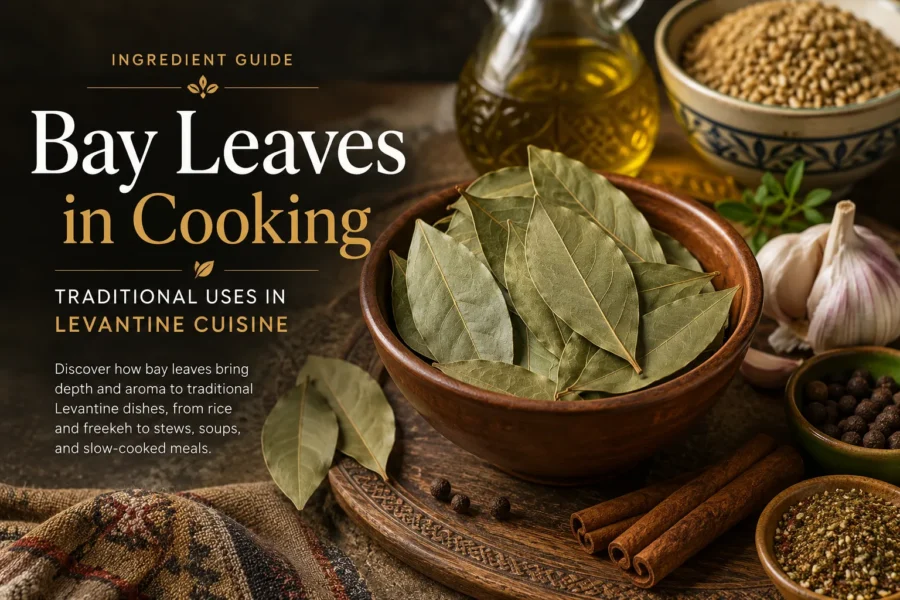
Bay leaves are a subtle yet essential ingredient used to enhance slow-cooked dishes, soups, broths, and grain preparations.
Although rarely eaten directly, their aroma contributes significantly to the comforting flavors associated with Levantine home cooking.
Read our guide to cooking with bay leaves.
Ancient Grains and Pantry Staples
Freekeh
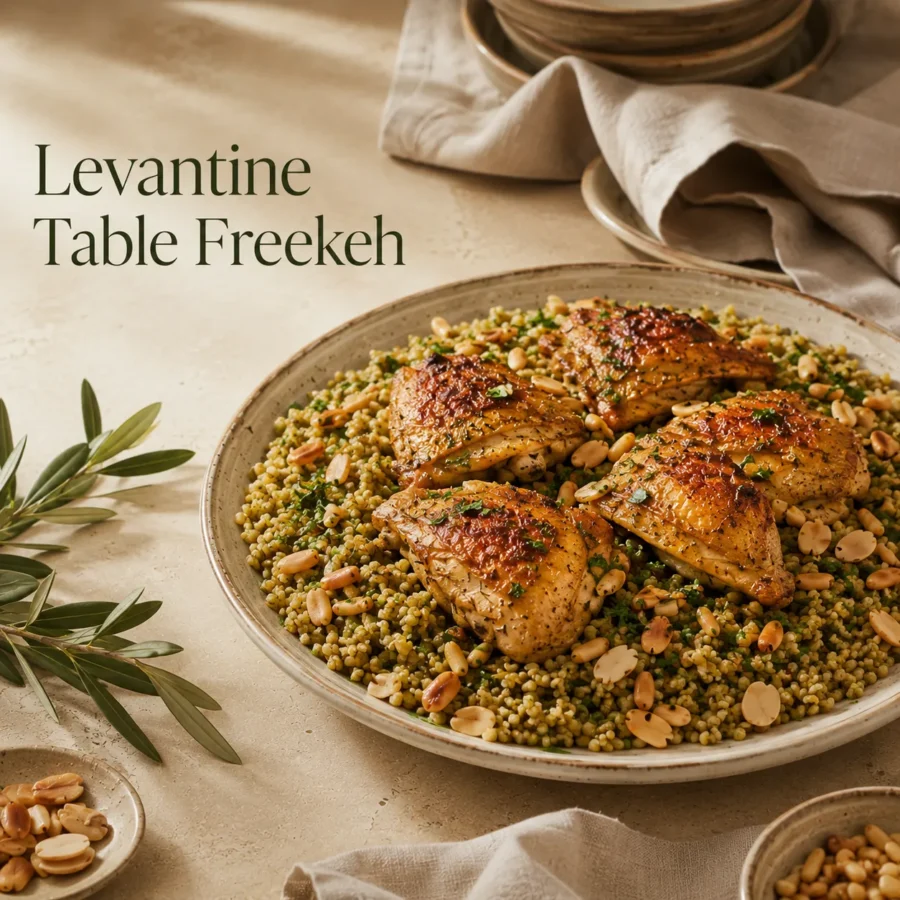
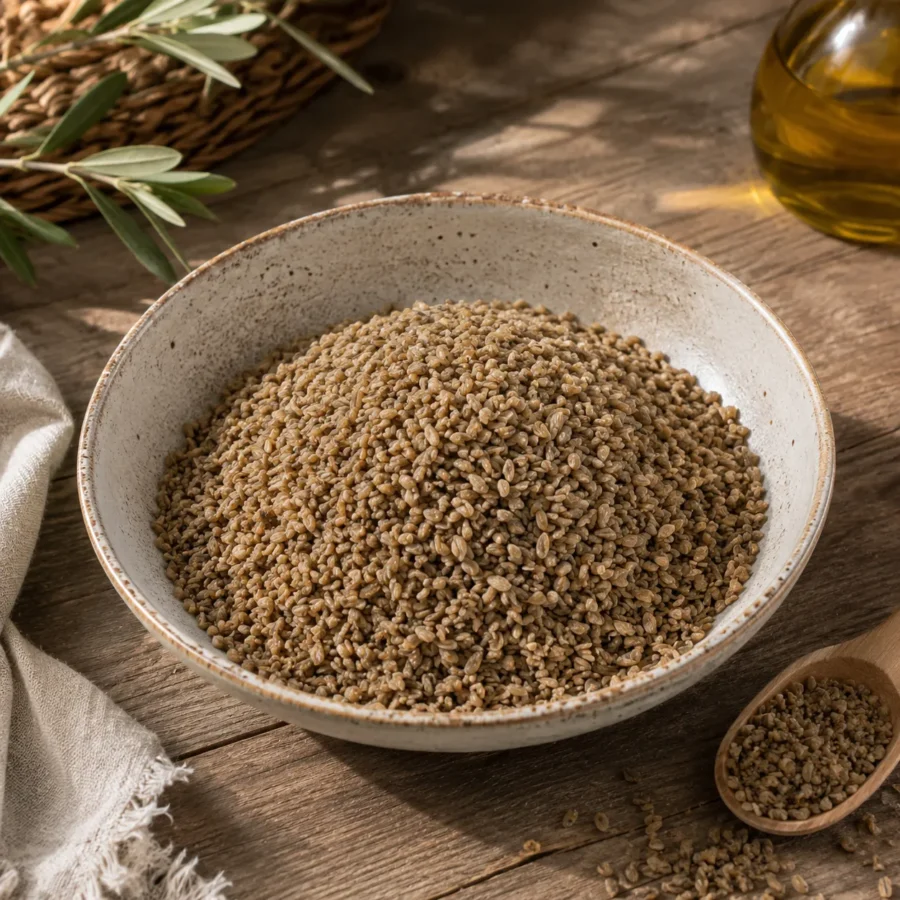
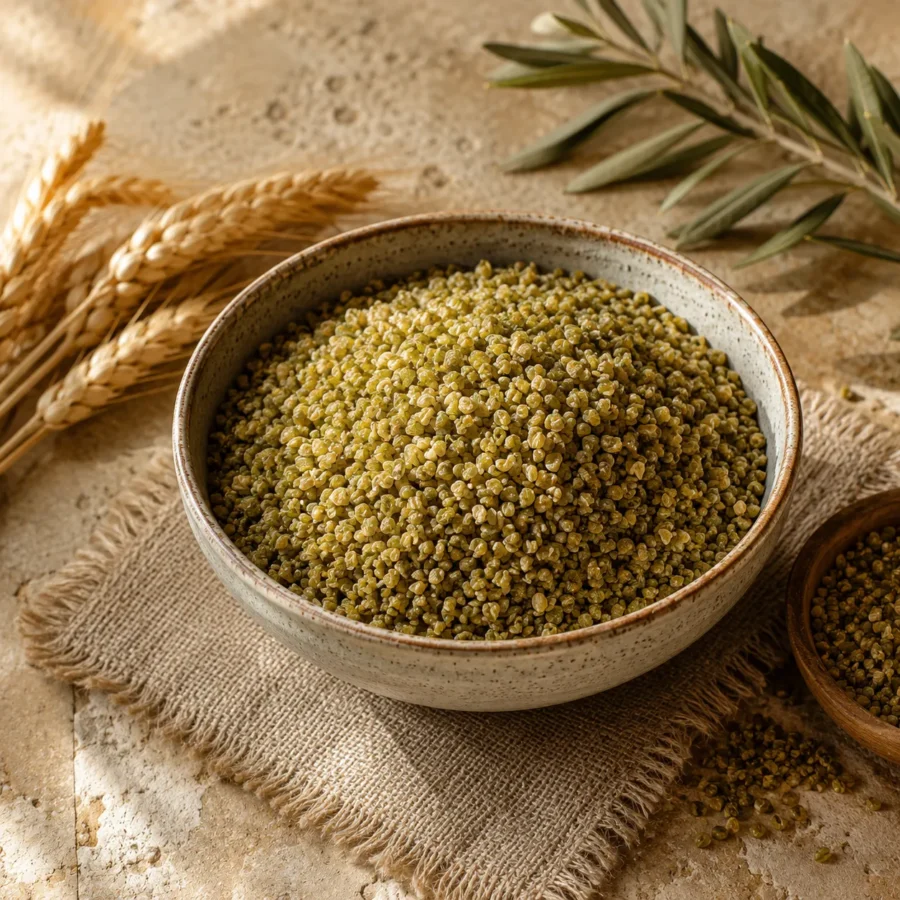
Freekeh is one of the Levant’s most celebrated ancient grains. Made from young green wheat that is harvested and roasted, it offers a distinctive nutty flavor and satisfying texture.
Freekeh is commonly prepared with chicken, lamb, vegetables, or enjoyed in hearty soups.
Learn more in our complete guide to freekeh.
Bulgur Wheat
Bulgur is another foundational ingredient used in countless recipes throughout the Levant.
Its versatility makes it suitable for salads, pilafs, stuffing mixtures, and traditional family dishes.
Rice
Rice remains an important pantry staple and is often paired with warming spices, nuts, herbs, and slow-cooked meats.
Traditional Greens and Vegetables
Molokhia
Molokhia occupies a special place in Levantine food culture. Known for its distinctive texture and comforting character, it remains a beloved dish across the region.
Explore our article about molokhia and its role in Levantine cuisine.
Olive Oil: The Heart of the Levantine Kitchen
No Levantine pantry is complete without olive oil.
Used in cooking, baking, dipping, and finishing dishes, olive oil connects many of the region’s most recognizable flavors.
It pairs naturally with herbs, grains, vegetables, and traditional spice blends.
How These Ingredients Work Together
One of the defining characteristics of Levantine cuisine is the way simple ingredients complement one another.
- Zaatar and olive oil
- Freekeh and bay leaves
- Sumac and onions
- Seven spice and rice dishes
- Molokhia and aromatic herbs
Rather than relying on complexity for its own sake, Levantine cooking focuses on balance and harmony.
Tips for Building Your Pantry
- Start with versatile ingredients.
- Choose quality herbs and spices.
- Store ingredients in airtight containers.
- Keep grains in a cool, dry place.
- Buy only what you will use regularly.
- Refresh spices periodically for the best flavor.
A thoughtfully stocked pantry allows you to prepare a wide variety of dishes without needing a long shopping list every time you cook.
Related DARLEVANT Products
Explore the ingredients that bring authentic Levantine flavors to everyday cooking.
Authentic Jordanian Sumac 350g
Crafted from carefully harvested sumac berries grown in the hills of Anjara, Jordan, this authentic ground sumac delivers a naturally vibrant tangy flavor without added citric acid. Deep in color, rich in character, and traditionally prepared, it brings the unmistakable brightness of Levantine cuisine to salads, musakhan, grilled meats, marinades, and everyday cooking.
- 100% pure ground sumac with no added citric acid.
- Harvested from the hills of Anjara, Jordan.
- Naturally tangy flavor with rich fruity depth.
- Perfect for musakhan, salads, marinades, grilled meats, and vegetables.
- Authentic Levantine ingredient with vibrant natural color.
- Carefully selected for freshness, purity, and consistent quality.
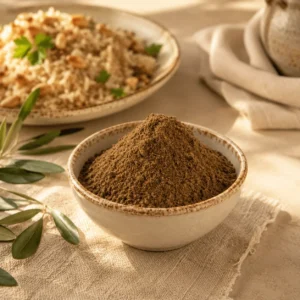
Levantine Seven Spice Blend 350g
Levantine Seven Spice Blend 350g is an authentic traditional baharat blend crafted to bring warmth, depth, and balanced aromatic flavor to everyday cooking. Finely ground for effortless use, it enhances meats, rice dishes, stews, soups, vegetables, and countless classic Levantine family recipes.
- Authentic traditional Levantine baharat blend.
- Warm, aromatic, and perfectly balanced flavor.
- Ideal for meats, rice dishes, stews, soups, and vegetables.
- Finely ground for effortless everyday cooking.
- Inspired by generations of Levantine culinary tradition.
- Carefully blended for freshness, consistency, and authentic flavor.
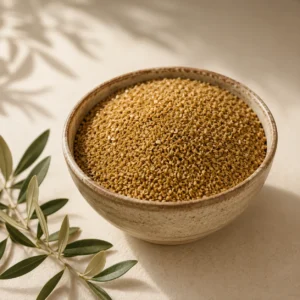
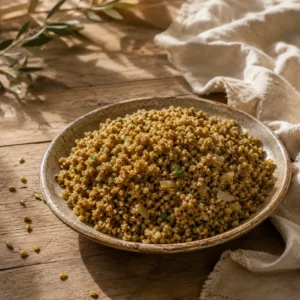
Palestinian Fine Freekeh 750g
Palestinian Fine Freekeh 750g is an authentic Palestinian heritage grain made from young green wheat that is traditionally roasted and gently rubbed to develop its naturally smoky flavor and fine texture. Perfect for soups, stuffed vegetables, grain bowls, and classic Levantine recipes, it brings generations of Palestinian culinary tradition to everyday cooking.
- 750g family-size pack.
- Authentic Palestinian fine freekeh.
- Prepared using the traditional roasting process.
- Naturally smoky flavor with a soft, fine texture.
- Perfect for soups, grain dishes, fillings, and traditional recipes.
- Carefully selected for authentic quality and consistent flavor.
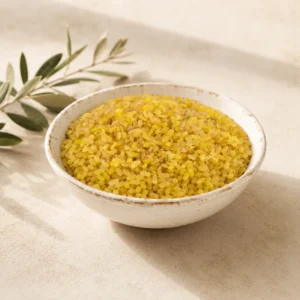
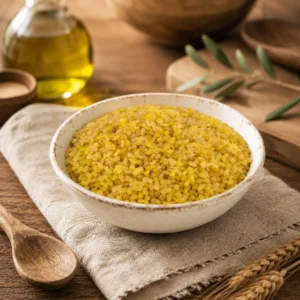
Premium Coarse Bulgur Wheat 250g
Premium Coarse Bulgur Wheat 250g is traditionally produced from carefully selected wheat to deliver the hearty texture and authentic character that have made coarse bulgur a staple of Levantine cuisine for generations. Perfect for pilafs, stuffed vegetables, hearty salads, and traditional family recipes.
- Premium coarse bulgur made from carefully selected wheat.
- Traditional Levantine pantry staple.
- Hearty texture ideal for pilafs and stuffed vegetables.
- Excellent alternative to rice in everyday cooking.
- Perfect for authentic Middle Eastern and Mediterranean recipes.
- Carefully selected for consistent quality and authentic flavor.
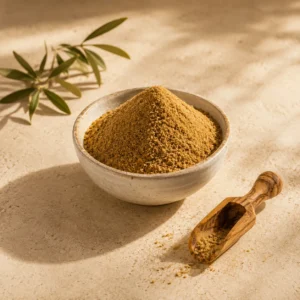
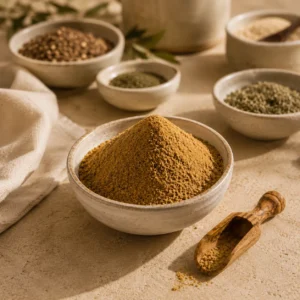
Premium Fine Ground Coriander 230g
Bring authentic Levantine cooking to your kitchen with DARLEVANT Premium Fine Ground Coriander 230g. Carefully selected and finely milled from premium coriander seeds, it delivers a warm citrusy aroma, delicate nutty notes, and beautifully balanced flavor that enhances traditional Middle Eastern recipes as well as everyday home cooking.
- Premium finely ground coriander with an exceptionally smooth texture.
- Warm, lightly citrusy, delicately nutty, and naturally balanced flavor.
- Perfect for authentic Levantine and Middle Eastern cuisine.
- Ideal for rice dishes, soups, marinades, spice blends, falafel, hummus, vegetables, poultry, seafood, and meat recipes.
- Evenly ground for consistent seasoning in every recipe.
- Selected for freshness, authentic aroma, and dependable everyday performance.
- 230g resealable pouch to help preserve flavor and natural fragrance.
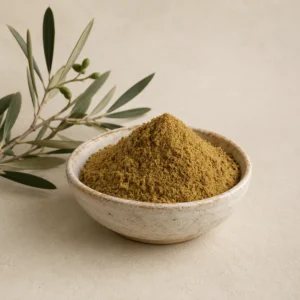
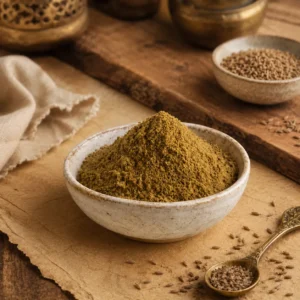
Premium Fine Ground Cumin 250g
Bring rich earthy aroma and authentic Levantine flavor to your favorite recipes with Premium Fine Ground Cumin 250g. Carefully milled from premium cumin seeds and known in Arabic as كمون, this finely ground spice blends effortlessly into soups, rice dishes, marinades, spice blends, falafel, hummus, grilled meats, and everyday home cooking.
- Premium finely ground cumin seeds.
- Warm earthy flavor with subtle nutty notes.
- Rich aromatic character.
- Perfect for falafel, hummus, rice dishes, soups, and marinades.
- Smooth texture for effortless blending into recipes.
- Carefully selected for exceptional quality and consistency.
Frequently Asked Questions
What are the most important ingredients in a Levantine pantry?
Zaatar, sumac, freekeh, olive oil, seven spice blend, bay leaves, and bulgur are among the most widely used pantry staples.
What is the difference between Levantine and Mediterranean cuisine?
Levantine cuisine is part of the broader Mediterranean culinary tradition but focuses on ingredients, dishes, and cooking methods specific to Jordan, Palestine, Syria, and Lebanon.
Do I need many spices to cook Levantine food?
No. Many traditional recipes rely on a relatively small collection of herbs and spices used in thoughtful combinations.
How should spices and grains be stored?
Store herbs and spices in airtight containers away from heat and sunlight. Keep grains in a cool, dry place.
Final Thoughts
Building a traditional Levantine pantry is about more than collecting ingredients. It is about understanding how simple herbs, grains, spices, and olive oil come together to create a cuisine defined by warmth, balance, and hospitality.
With a few carefully chosen staples on hand, you can begin exploring the flavors that have shaped Levantine kitchens for generations.